Energy Efficient Spray Booth

Painting large industrial components uses enormous amounts of energy. Heating, cooling, and dehumidifying the air inside a spray booth is one of the largest ongoing costs in industrial painting, and it only grows as production scales up. 

An energy efficient spray booth is designed to change that equation, cutting operating costs without slowing down production or compromising air quality.  

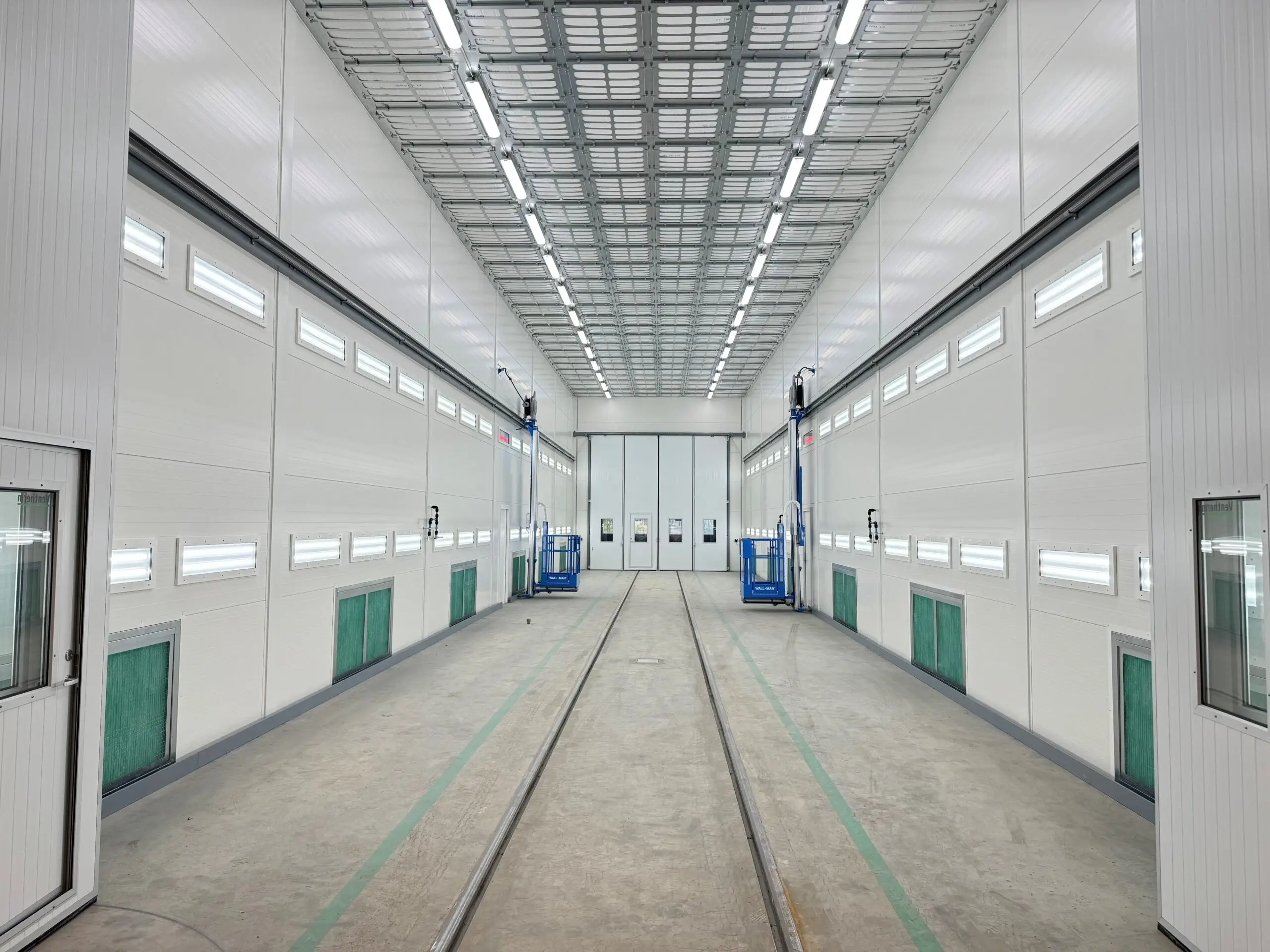
Case Finnish Steel Painting, Findland

What is an energy efficient spray booth?

An energy efficient spray booth is built to minimize the energy required for heating, cooling, and ventilating incoming air. Traditional spray booths draw in outside air, condition it to the required temperature and humidity, typically 20-25°C and 50-75% relative humidity, and exhaust it after a single pass. 

That process consumes large amounts of energy, especially in facilities painting big components like wind turbine parts, railway carriages, or offshore structures. An energy efficient design recovers and reuses that energy instead of wasting it.

How does heat recovery lower energy costs?

Heat recovery lowers energy costs by transferring warmth from exhaust air to incoming fresh air, so you do not have to heat every cubic meter from scratch. Cross heat exchangers capture thermal energy before it leaves the booth and use it to preheat incoming air. 

Depending on the design, this can recover up to 80% of the heat that would otherwise be lost. This operates within the same EN 16985 airflow requirements and ATEX zone classification as any standard spray booth. The effect is strongest in colder climates, where heating demand runs for most of the year.

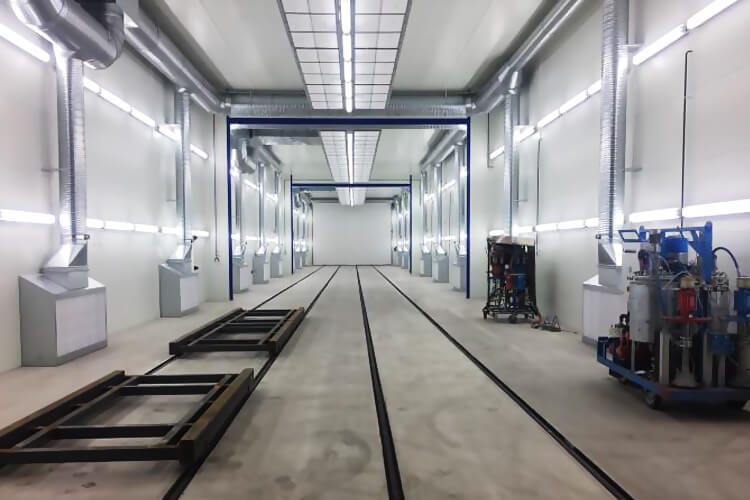
Case DSB

What role does zone-based ventilation play in energy savings?

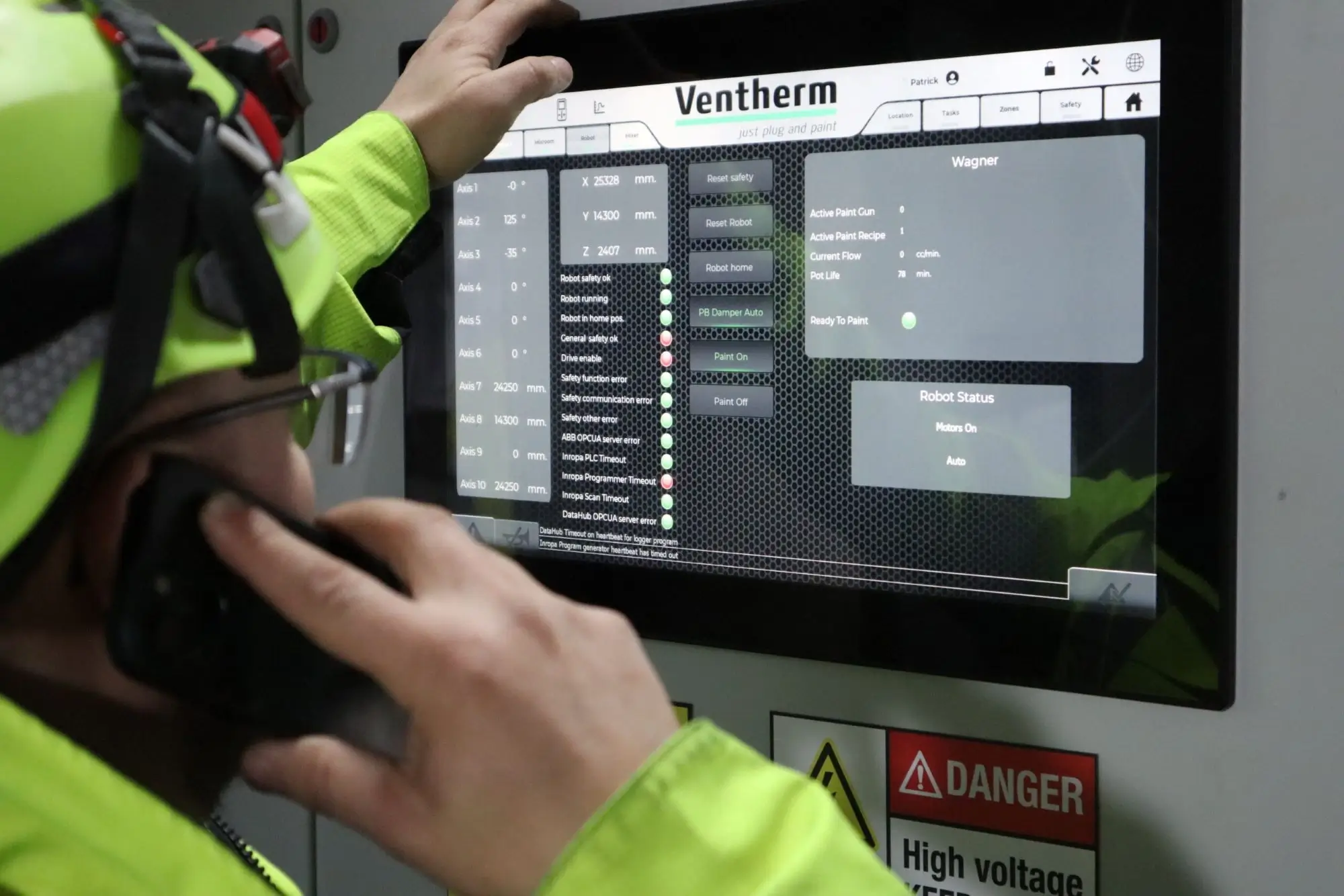
Zone-based ventilation saves energy by adjusting airflow to match where painting is actually happening, rather than ventilating the entire booth at full capacity at all times. 

Control systems track the position of the paint robot or operator and increase airflow only in the active zone, typically maintaining the 0.3 m/sec vertical air velocity required for vertical downdraft ventilation, while surrounding zones run at a fraction of that rate. This significantly lowers the total volume of air that needs to be conditioned.  

How much can you save with an energy efficient spray booth?

Savings vary by facility, but combining heat recovery with zone-based ventilation typically cuts total energy consumption significantly compared to a conventional booth: 

  • Heat recovery reduces the cost of preheating incoming air
  • Zone-based ventilation reduces the total volume of air conditioned throughout the day
  • Both effects compound continuously throughout the day 

The combined savings continue for the lifetime of the system, with the largest impact in facilities running long shifts. 

Ventherm Catalouge

Would you like more information? Please read the Ventherm catalog to view product designs, the company’s benefits, and specifications for use and installation.

Flag UK
Flag Denmark
Flag Sweeden
Flag Germany
Flag Spain
Flag france

Find the right energy efficient spray booth for your project

The right energy efficient spray booth depends on the size of your components, your production volume, and your climate. We design each system around your actual production, whether you need a single booth for one product line or a larger industrial spray booth configuration for varying part sizes, including double booth setups with an intermediate roller door that lets you condition only the section you are actively using. 

Contact us to discuss how an energy efficient spray booth can lower your operating costs while keeping production running at full capacity. 

Frequently Asked Questions

Existing spray booths can be upgraded with heat recovery and zone-based ventilation without a full rebuild. Facilities typically convert older booths by installing a new air handling unit with a cross heat exchanger and reusing structural elements like ducting, pits, or chimney connections. This approach reduces both cost and downtime compared to building a new facility from scratch.

Energy efficient ventilation maintains the same paint quality and safety standards as conventional systems. Zone-based systems still deliver the airflow and air velocity required by EN 16985, and stable temperature and humidity control tends to improve consistency in the finish. Energy efficiency and compliance work together rather than against each other.

Energy efficient spray booths are built to handle large components like agricultural machinery, marine vessels, and heavy fabrication parts. Ventilation and heat recovery systems scale to the size of the booth, so bigger components do not require sacrificing energy efficiency.

Energy efficient spray booths perform especially well in cold climates. Facilities in arctic or sub-zero conditions benefit the most, since the system runs at maximum recovery for most of the year rather than only during occasional cold spells.