Industrial Spray Booths

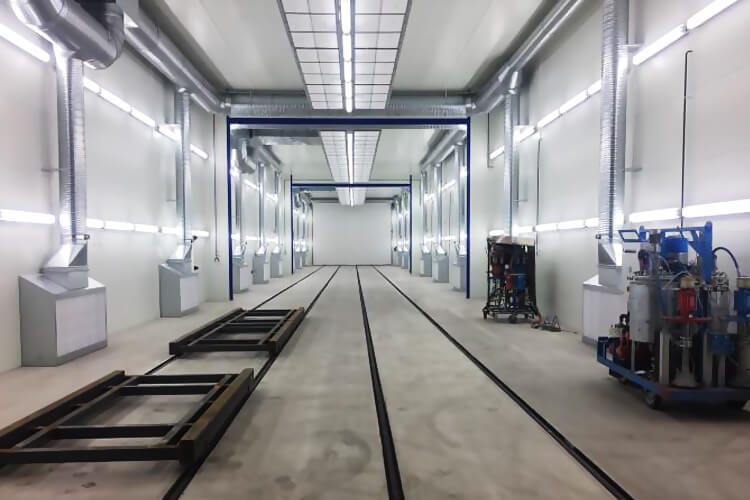
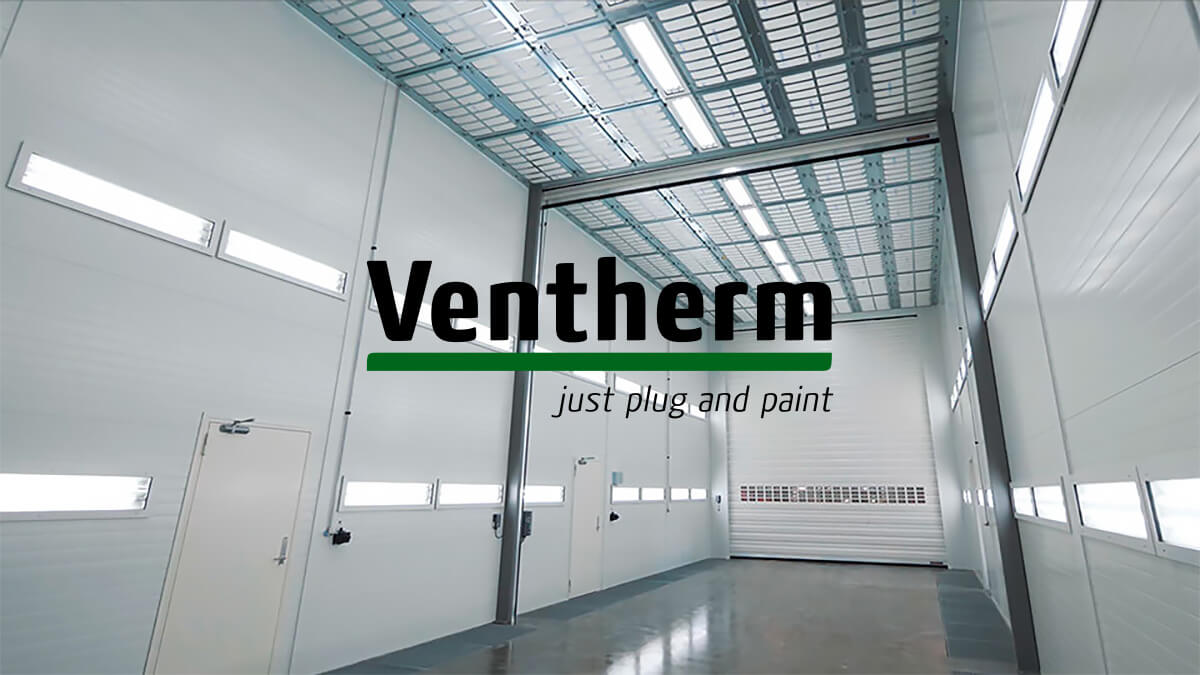
An industrial spray booth is an enclosed, controlled coating environment engineered for components, geometries, and coating specifications that standard automotive booths cannot accommodate. 

When you coat wind turbine foundations, offshore jacket and transition piece structures, or railway rolling stock, you are handling components up to 60 meters long, applying multi-layer coating systems, and holding the booth at 20-25°C with humidity between 50 and 75% – all while protecting your operators and controlling energy costs.

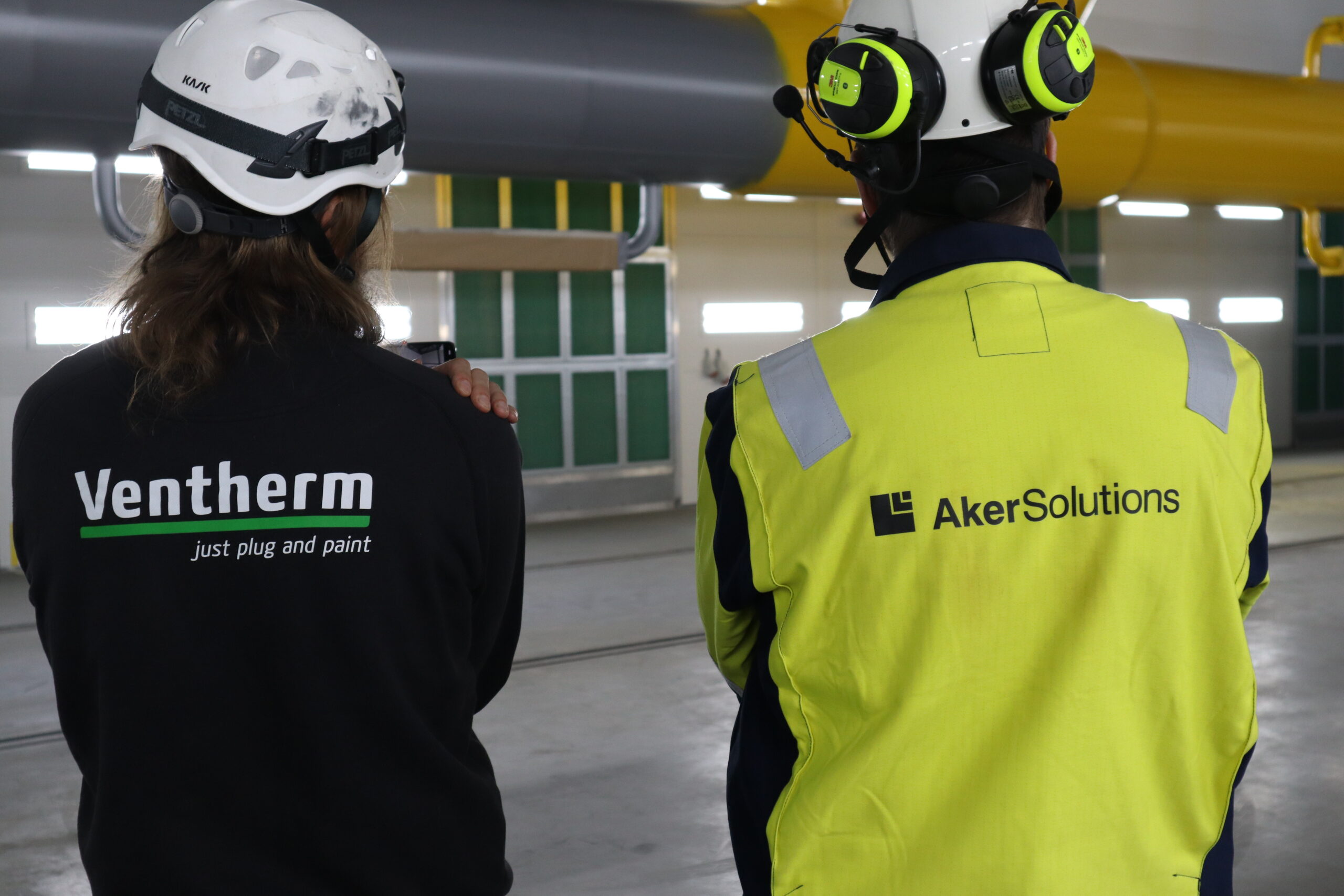
Case Finnish Steel Painting, Findland

What makes an industrial spray booth different from a standard automotive booth?

  1. What sets an industrial spray booth apart from a standard automotive booth comes down to scale, airflow engineering, and safety classification. Where automotive booths are built around fixed dimensions, industrial booths have to handle large components with complex surface profiles, maintaining even counter-pressure across the entire booth volume. 

How does airflow work in an industrial spray booth?

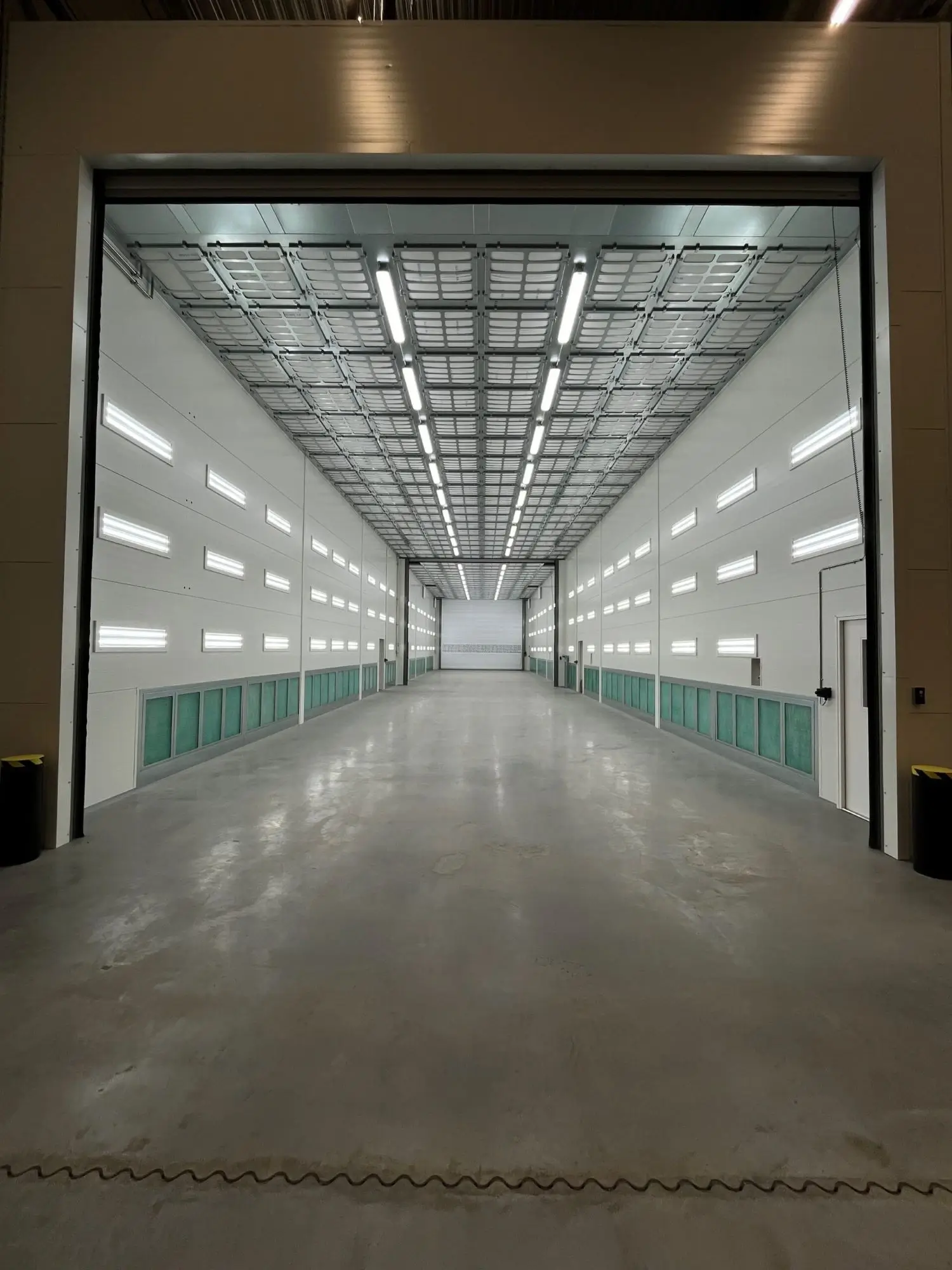
Our spray booths inject air across the full ceiling through filters, which creates the counter-pressure that holds a uniform downdraft throughout the booth. Extraction runs through floor gratings with paint-stop filters beneath, pulling overspray away from your operators’ breathing zone at 0.3 m/sec. vertically, as specified under EN 16985. Wall extraction draws it back past the operator instead, straight through the breathing zone.

How can you reduce the energy consumption of an industrial spray booth?

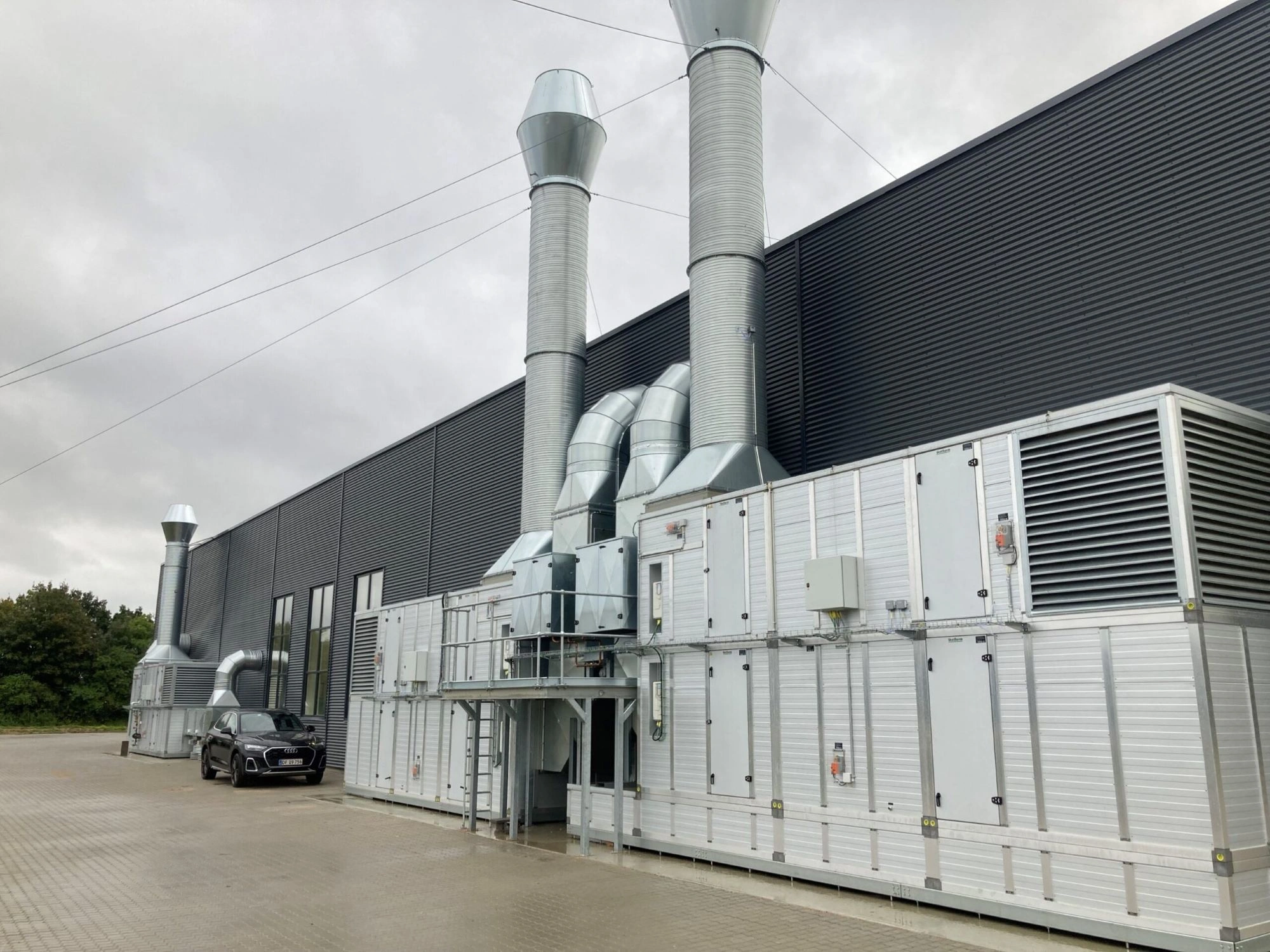
The most effective way to cut energy consumption in an industrial spray booth is to recover the heat it would otherwise lose through the extraction air. Our Energy-Saving-Package recovers that heat using cross-heat exchangers and variable frequency drives on all motors, capturing up to 85% of the heat from the extraction air. 

On large installations, zone ventilation cuts consumption further still – a 100-meter booth running zone ventilation under EN 16985 reduces energy use to roughly one sixth of full extraction.

Ventherm Catalouge

Would you like more information? Please read the Ventherm catalog to view product designs, the company’s benefits, and specifications for use and installation.

Flag UK
Flag Denmark
Flag Sweeden
Flag Germany
Flag Spain
Flag france

Getting started with your booth project

Our engineering team has designed and installed industrial spray booths across wind power, offshore, defense, rail, and agricultural sectors since 1983. If you want to discuss your specific coating requirements, we are ready to review your application and develop a solution that fits your operation.

Ventherm A/S Spray and paint booth

Does an industrial spray booth need ATEX certification?

ATEX classification is mandatory for any industrial spray booth where solvent-based coatings are applied in an enclosed space, and the zone is calculated under EN 16985, not assumed. Industrial booths are typically designated zone 2, which determines the specification of all electrical components inside. 

What safety requirements are built into an industrial spray booth?

Beyond ATEX classification, our industrial paint booths are built to a defined set of safety requirements from the start:  

  • Non-combustible construction throughout
  • Minimum 750 lux illumination per EN 16985
  • Automatic shutdown if ventilation drops below the required level
  • A separate fire section where local authorities require it 

Can a spray painting robot be integrated into an industrial spray booth?

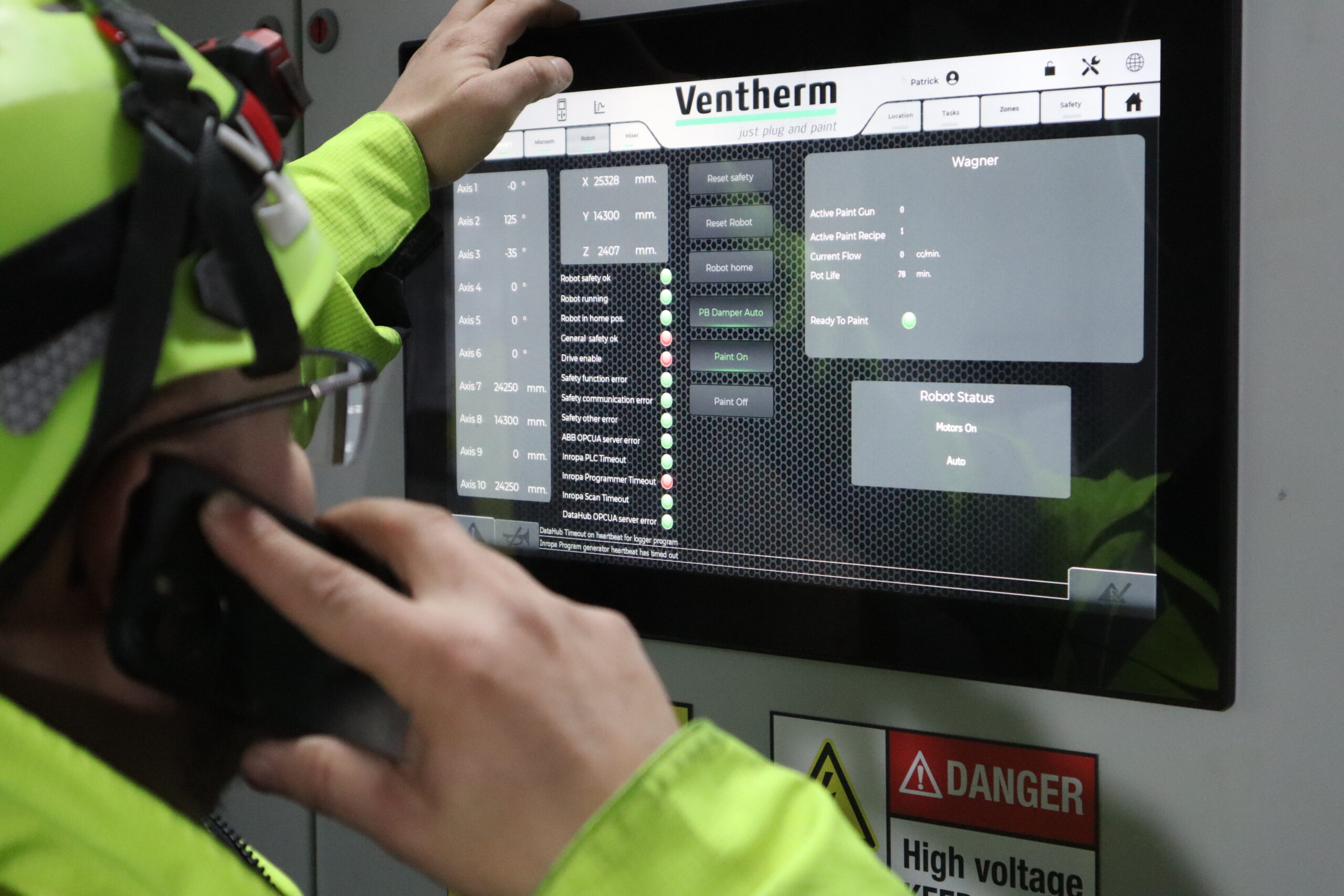
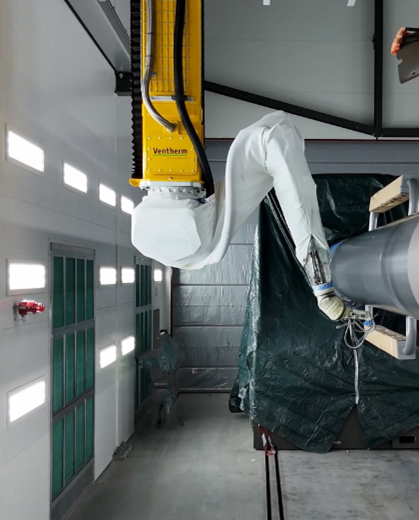
A spray painting robot can be integrated into an industrial spray booth when the booth and the automation system are specified together, rather than retrofitted onto each other. Integrating a spray painting robot requires:

  • Adequate clearance for robot movement
  • Structural mounting points for gantry or floor-driven systems
  • Zone ventilation matched to the robot’s working pattern

Our self-programming robots scan each unpainted part in 3D and generate the coating program directly from the scan, so the system knows exactly where the work is happening.

Frequently Asked Questions

Lead time for an industrial spray booth depends on its size and complexity, and on the conditions at your site. A single standard booth is faster to deliver than a monopile line or a facility with several Air Handling Units, where both the engineering and the manufacturing scale with the size of the installation. We establish a firm timeline during the engineering phase, once we have looked at your components, site conditions, and throughput needs.
Most existing booths can be retrofitted with heat recovery. We add an Air Handling Unit with a cross-heat exchanger and usually re-use the chimney and ducting already in place, which keeps the work and cost down. Whether it fits your booth comes down to your current ventilation layout and the space available for the equipment – something we assess during a site visit.

An industrial spray booth can be built to handle components from agricultural machinery frames up to offshore jacket structures at 60 x 16 x 10 meters. Each booth is engineered to specification rather than picked from a catalogue, so the dimensions, doors, and airflow are all matched to your largest recurring part. The booth is sized to bring the component in, coat it, and dry it without compromise.

Full extraction runs the entire booth at maximum airflow at all times, while zone ventilation only runs extraction where coating is actively happening. On a large booth, that can cut energy use to around a sixth of full extraction, without affecting air quality or operator safety in the active zones. It is one of the main reasons large installations stay economical to run.