Custom Blast Rooms Built for Your Components and Production

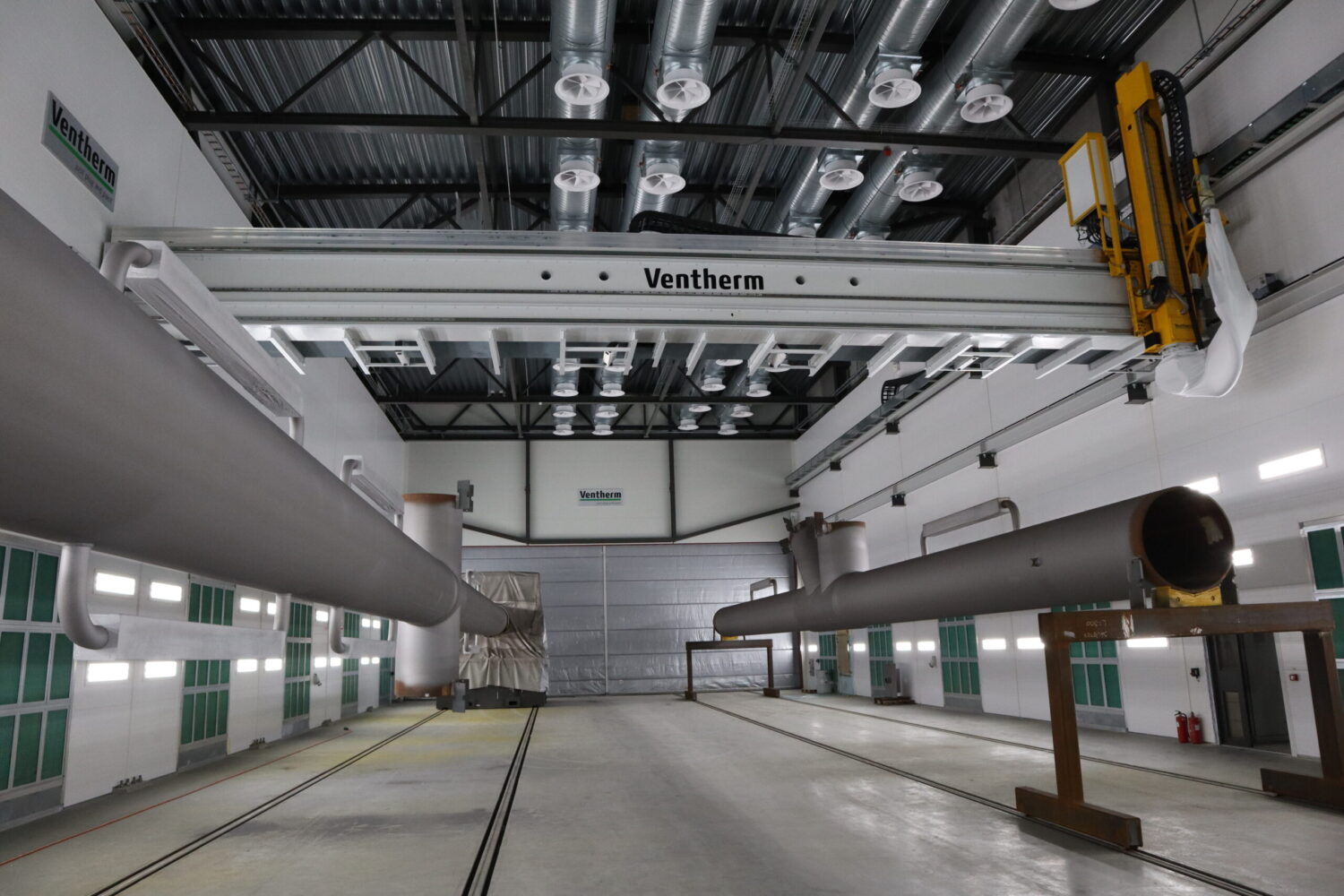
Components measured in tens of metres, with complex weld geometries and strict surface preparation requirements, place demands on a blast room that standard configurations are not designed to meet.

Ventherm designs and manufactures custom blast rooms for heavy industry, built around your component sizes, production volumes, site conditions, and regulatory requirements. Every system is commissioned as a complete, operational installation.

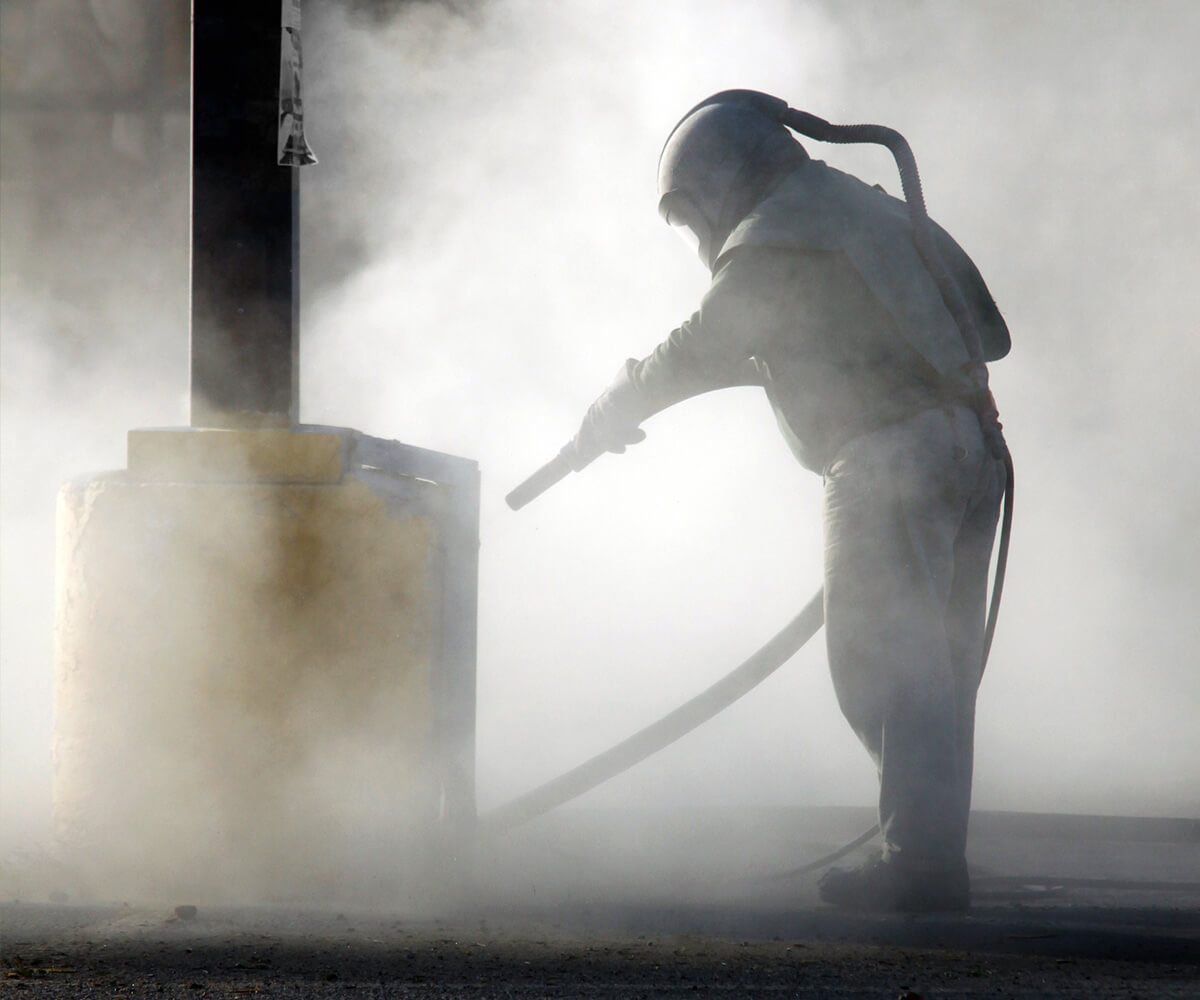
Sand blasting

What Are The Essential Components of A Custom Blast Room?

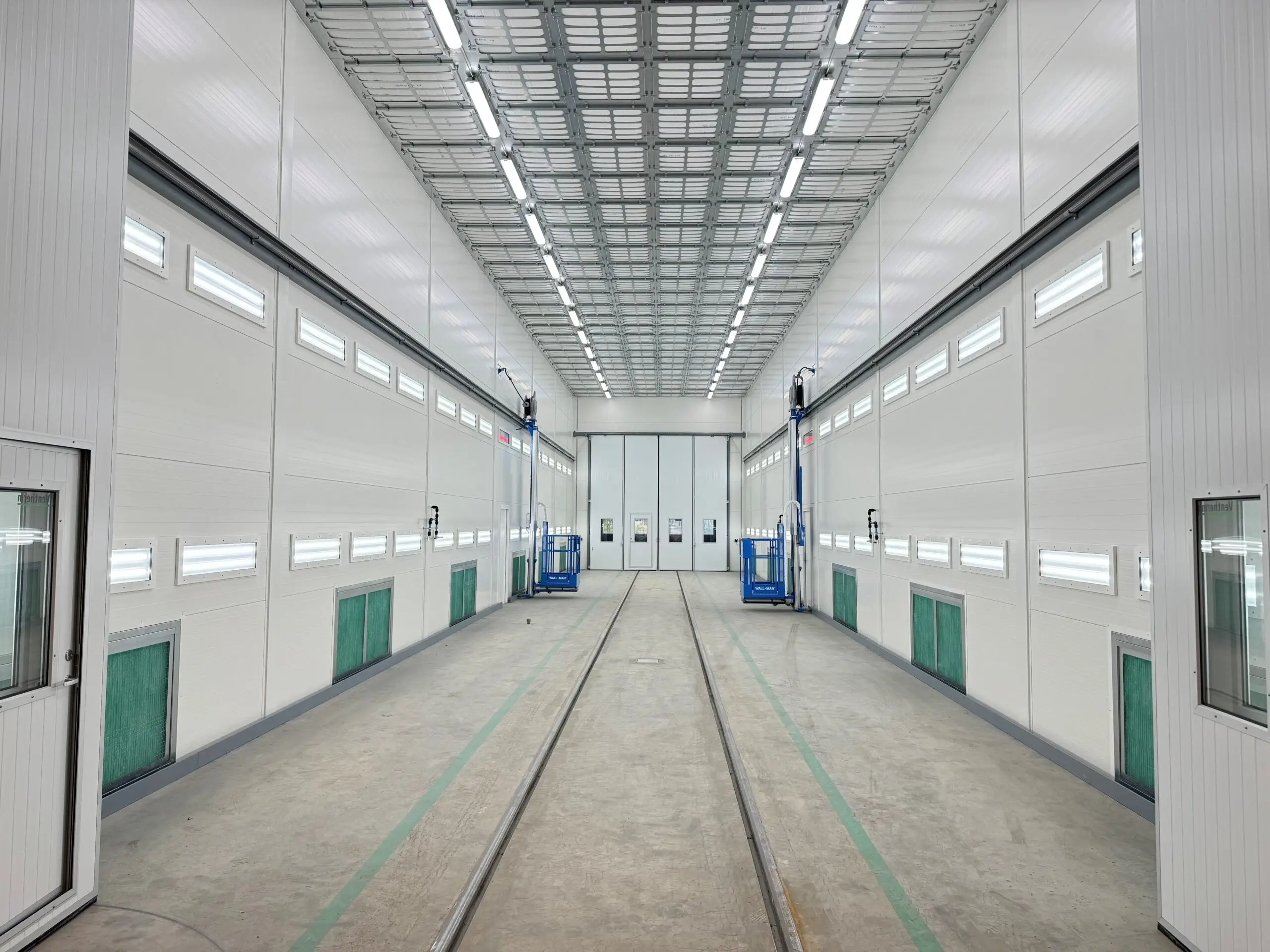
A custom blast room is built around six core components: structural containment, media reclamation, dust collection, ventilation, filtration, and lighting. Each component is calculated and configured to work as part of an integrated system, not selected from a standard catalogue.

Structural containment

Panels are constructed from reinforced steel with replaceable wear plates in high-impact zones. This keeps the structure intact under continuous abrasive use without requiring full replacement.

Media reclamation

The system recovers, separates, and recirculates blast media through floor hoppers, elevator systems, and classifiers that remove degraded particles and contaminants. Without a dedicated reclamation system, blast media is consumed and discarded after a single pass. A correctly configured system recovers, separates, and recirculates it. The result is a substantial reduction in ongoing media consumption.

Blast room from Ventherm

Dust collection and filtration

Air volumes are calculated based on room dimensions, blast equipment capacity, and media type. Each installation has its own parameters, and correct sizing depends on those specifics. An undersized system creates health risks and reduces surface inspection accuracy. An oversized system wastes energy without additional benefit.

Ventilation and airflow

Airflow is directed toward collection points and away from the operator’s breathing zone. In larger rooms, zoned ventilation adjusts flow based on where blasting is actively taking place, reducing energy consumption without compromising air quality.

Lighting

Explosion-proof LED fixtures, positioned to eliminate shadow zones, allow operators to assess surface condition accurately during application and inspect the result before components move to the next process stage.

How do we design a custom blast room for industrial use?

A custom blast room is designed around the components being processed. Their size, weight, geometry, and required surface standard shape every aspect of the room, from floor load calculations and material handling to blasting equipment selection and ATEX classification.

Room dimensions

Room height and footprint are calculated from the largest components currently in production, with headroom for future growth. A room that fits only today’s components limits your production capacity before it has paid back its cost. Where components are unusually tall, operator platforms or adjustable lighting systems are built into the design from the start, not added later.

Material handling

Material handling determines the structural design of the room before a single panel is specified. Overhead cranes, rail systems, and roller beds each place different load requirements on the floor and supporting structure. We calculate and engineer for those loads at the design stage, so the room handles your actual production flow rather than an idealised version of it.

Blasting equipment

The choice of blasting equipment determines media flow paths, pot positioning, and control placement throughout the room. A sandblast booth using pressure pots requires a different layout than a room built around a centrifugal wheel system. Equipment is positioned for operator efficiency and process performance.

ATEX compliance

Where combustible dust or potentially explosive atmospheres are present, ATEX classification is treated as a design requirement from the outset, not a compliance step applied after the room is built. Our industrial blast rooms are engineered to meet Zone 21 or Zone 22 requirements, including explosion-proof electrical installations and correct grounding throughout the entire room.

Contact us about your custom blast room project

Your components, your site, and your production flow are the starting point. We review your specifications, run the necessary calculations, and propose a room configuration that fits your actual operation. 

Contact us for a non-binding discussion about your blast room solution.

Ventherm Catalogue

Looking for further information? Please read Ventherm’s catalogue for product designs, company merits, and specifications for use and implementation.

Flag UK
Flag Denmark
Flag Sweeden
Flag Germany
Flag Spain
Flag france

Frequently Asked Questions

Project timelines vary based on complexity, room size, and site conditions. Lead time is confirmed during the design phase before fabrication begins, covering engineering, fabrication, factory testing, on-site installation, and operator training.

Custom blast rooms can be designed from the outset to accommodate robotic blasting systems. Integration needs to be planned at the design stage, not retrofitted, as robot mounting structures, safety zones, vision system lighting, and ATEX-compliant cabling all influence the room layout. A simulation of robot reach and coverage is run before fabrication begins to confirm the configuration works for your specific components.

Routine maintenance covers filter replacement, wear plate inspection in high-impact zones, and reclamation system servicing. We provide a maintenance schedule matched to your usage patterns and blast media type, so your team knows what to check and when, rather than reacting to problems after they occur.

Well-designed blast rooms include provision for future modification without rebuilding the room from scratch. Reclamation capacity can be scaled, dust collection zones can be reconfigured, and material handling layouts can be adapted as your production volumes or component sizes change.

Large blast rooms use zoned ventilation systems that direct airflow based on where blasting is actively taking place. Inactive zones run at reduced capacity, which lowers energy consumption without compromising air quality or operator visibility in the working area.