Sandblast Booths for Heavy Industry

The quality of your surface preparation depends directly on the environment you do it in. Our blast rooms and sandblasting rooms are built for some of the most demanding operations in wind power, offshore, defence, and heavy manufacturing. 

A poorly specified booth affects your surface quality, throughput, and operating costs, and those effects compound over time.

Sand blasting
Blast rooms from Ventherm

What Is A Sandblast Booth?

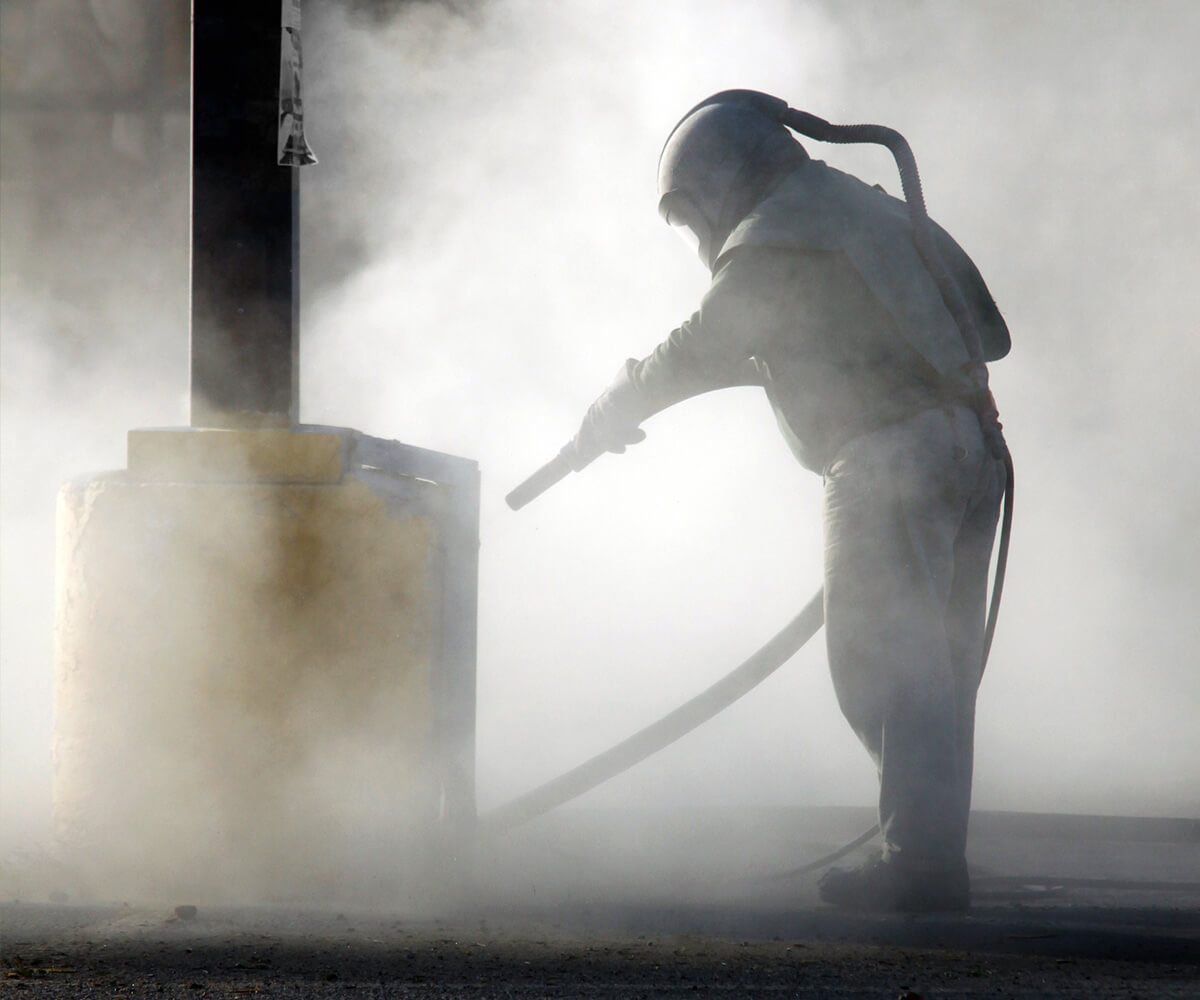
  • A sandblast booth is an enclosed workspace for abrasive blasting, where compressed air propels abrasive materials at high velocity against surfaces to remove rust, mill scale, old coatings, and surface contaminants. The enclosure keeps media and dust contained, protecting your operators and facility while maintaining visibility and air quality throughout the process.
  • Sandblasting rooms vary significantly in size and configuration, from compact booths for valve reconditioning to large-scale blast rooms capable of handling entire railway carriages or structural steel components exceeding 20 meters.

How Does An Abrasive Blasting Enclosure Work?

Abrasive delivery

Pressure pot systems or suction-feed equipment push abrasives through hoses using compressed air. The combination of nozzle design, abrasive type, and air pressure determines your surface profile and productivity rates. Getting these parameters right from the start saves significant time and material cost throughout production.

Ventilation

Ventilation is where many installations fall short. Your dust collection system needs sufficient airflow to maintain visibility while capturing fine particulate. Our systems create a controlled airflow pattern that sweeps dust away from the operator’s breathing zone and toward filtration units, maintaining safe working conditions and minimising abrasive loss.

Media Recovery

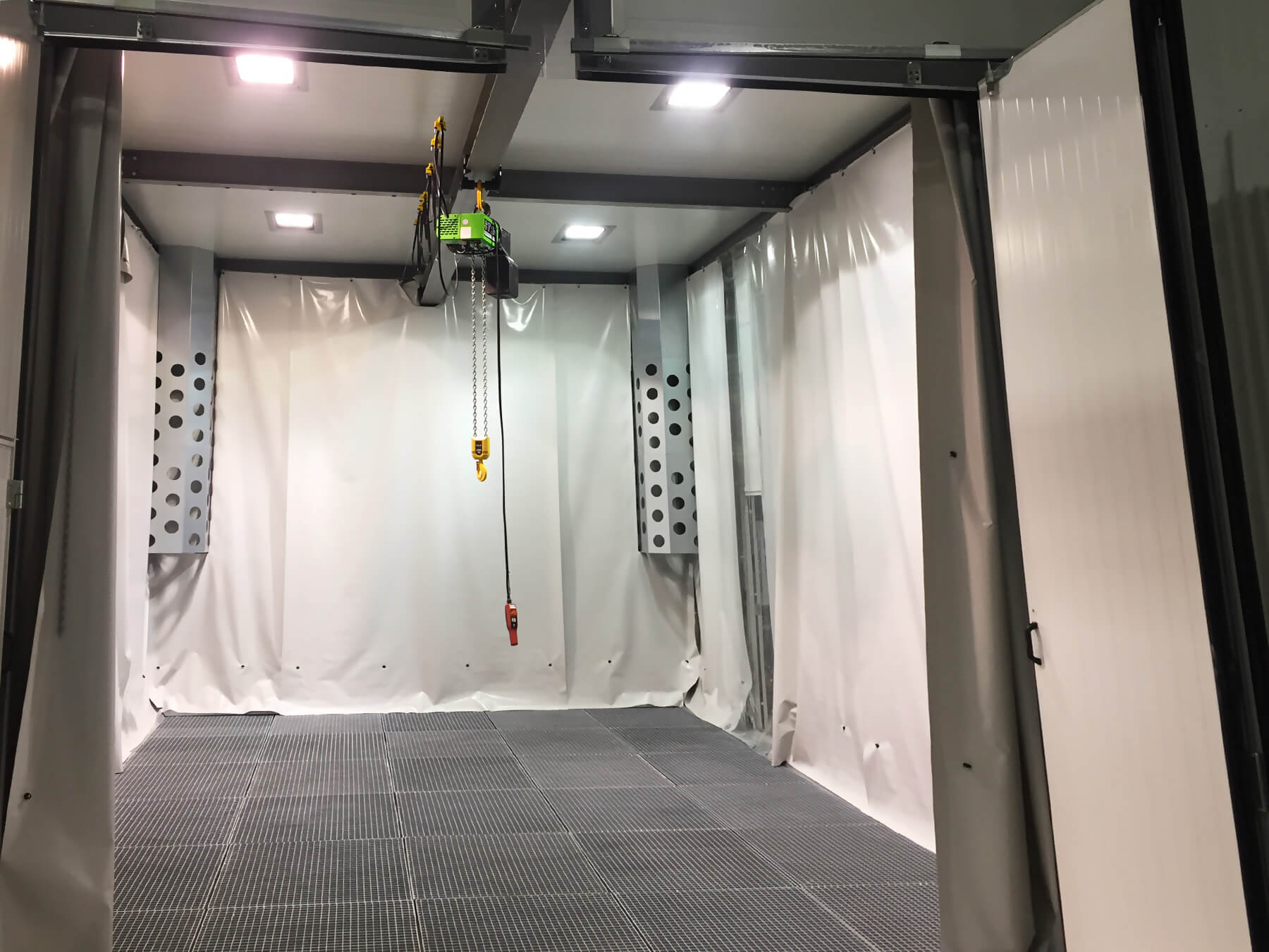
Floor grating systems allow spent media to fall into hoppers below, where pneumatic or mechanical recovery systems transport it back to storage after cleaning. A well-designed recovery system can reuse 95% or more of your abrasive media, reducing both operating costs and environmental impact.

Automation

Many modern installations incorporate a sandblasting robot that handles the blasting process automatically. It delivers consistent surface profiles, reduces physical strain on operators, and keeps production running – without stopping the line for programming.

What Are The Most Common Sandblast Room Configurations?

The right sandblast room configuration depends on what you are processing, how much of it, and how it moves through your facility. The most common configurations are:

  • Drive-through – Parts enter through one end, undergo blasting on roller beds or rail systems, then exit directly into the coating process. Best suited for long components like structural steel or railcars.
  • Walk-in – Operators work inside the enclosure with handheld blast equipment, suited for complex geometries or varied part sizes. These industrial blast rooms can accommodate forklifts or overhead cranes.
  • Turntable – The workpiece rotates while the operator remains stationary, reducing fatigue and improving consistency on cylindrical or symmetrical components.
  • Custom – When standard configurations do not match your setup, custom blast rooms can be built around your specific components and process requirements.

All configurations can be supplemented to suit your handling requirements. Common additions include wireless remote control, trolley and rail systems, filters with disposal in big bags, built-in cranes, and wall-mounted lighting.

Blast room from Ventherm

What Are The Safety Guidelines For Operating a Blast Room?

Working in a sandblast booth involves real risks. High-pressure air, abrasive particles, and confined spaces all demand proper procedures.

Respiratory protection

Blast operators require supplied-air respirators that provide positive-pressure clean air, even in well-ventilated enclosures. Fine particulate from certain abrasives poses serious long-term health risks that standard dust masks cannot prevent.

Personal protective equipment

Beyond respiratory protection, operators need heavy-duty blast suits to resist abrasive wear, leather gloves to protect against abrasion and cold, and steel-toed boots and hearing protection.

Pre-shift inspections

Before each shift, check ventilation system performance, lighting, and blast equipment condition. Worn nozzles reduce efficiency and create unpredictable spray patterns. Damaged hoses can fail under pressure.

Lockout/tagout procedures

Compressed air systems store significant energy even after shutoff. Clear communication protocols between operators and support personnel are a basic but often overlooked requirement.

Emergency shutdown

Your blast room should incorporate emergency shutdown systems accessible from multiple locations, allowing an operator to immediately depressurize the system and activate ventilation if equipment fails. If you are commissioning a new facility, emergency shutdown placement should be agreed during the design phase.

Ventherm Catalogue

Looking for further information? Please read Ventherm’s catalogue for product designs, company merits, and specifications for use and implementation.

Flag UK
Flag Denmark
Flag Sweeden
Flag Germany
Flag Spain
Flag france

Find the right sandblast booth for your operation

We have spent over 40 years engineering blast and paint solutions for heavy industries worldwide. We hold an AAA credit rating for 12 consecutive years and have been ISO 9001-certified since 2017. We do not offer off-the-shelf booths. We analyse your specific components, production requirements, and facility constraints to design systems that match your production reality. 

Contact us to discuss your requirements.

Frequently Asked Questions

With proper maintenance, a well-constructed booth can operate for more than 20 years. The steel structure itself is extremely durable. Wear components like blast nozzles, hoses, and dust collector filters require periodic replacement, but that is standard maintenance, not a sign the booth is reaching the end of its life.

Retrofitting an existing building is a straightforward process. We have installed blast booths in repurposed warehouses and purpose-built facilities alike. Key considerations are ceiling height for components and handling equipment, structural capacity for dust collector loads, and adequate power supply for compressors and ventilation.

The difference comes down to the abrasive media used. Shot blasting uses metallic media like steel shot or grit. Sandblasting originally referred to silica sand, but modern abrasive blasting covers a wide range of media. The choice influences both recovery system design and filtration requirements.

The right abrasive depends on the surface material, the required surface profile, and your downstream coating specification. Steel grit and shot are common for heavy steel structures, while non-metallic media like garnet is better suited for applications where contamination from metallic particles is a concern. We specify abrasive type as part of the system design.